
The portrait lens that changed my landscapes
Everyone calls the 85mm a portrait lens. I bought one in 2024, pointed it at the horizon and haven't looked back. Here's why.
Ask most photographers what an 85mm lens is for and you will get the same answer: portraits. It flatters faces, melts backgrounds and keeps you a comfortable distance from your subject. All true. But somewhere along the way that turned into a rule, and I do not believe in rules about which lens you are allowed to use for what.
I bought a Viltrox 85mm f/1.8 in 2024. It was meant to be a portrait lens. Within a few weeks it was the lens I reached for on every sunset, every field and most of my car shoots too. These are the pictures it has given me, and what I have learned from using a "portrait lens" for everything except portraits.

Why 85mm works for landscapes
Wide-angle lenses are the default for landscapes because they fit everything in. That is exactly the problem. Fit everything in and nothing stands out; the turbines become pins on the horizon, the sun becomes a dot and the sky is just a big empty space at the top of the frame.
An 85mm does the opposite. It makes you choose.
Compression
Longer focal lengths flatten distance. Objects that are hundreds of metres apart look stacked on top of each other, as if they were standing in a line. That is the whole look of these pictures: pylons, turbines and power lines layered into one dense, graphic frame instead of scattered across an empty field.
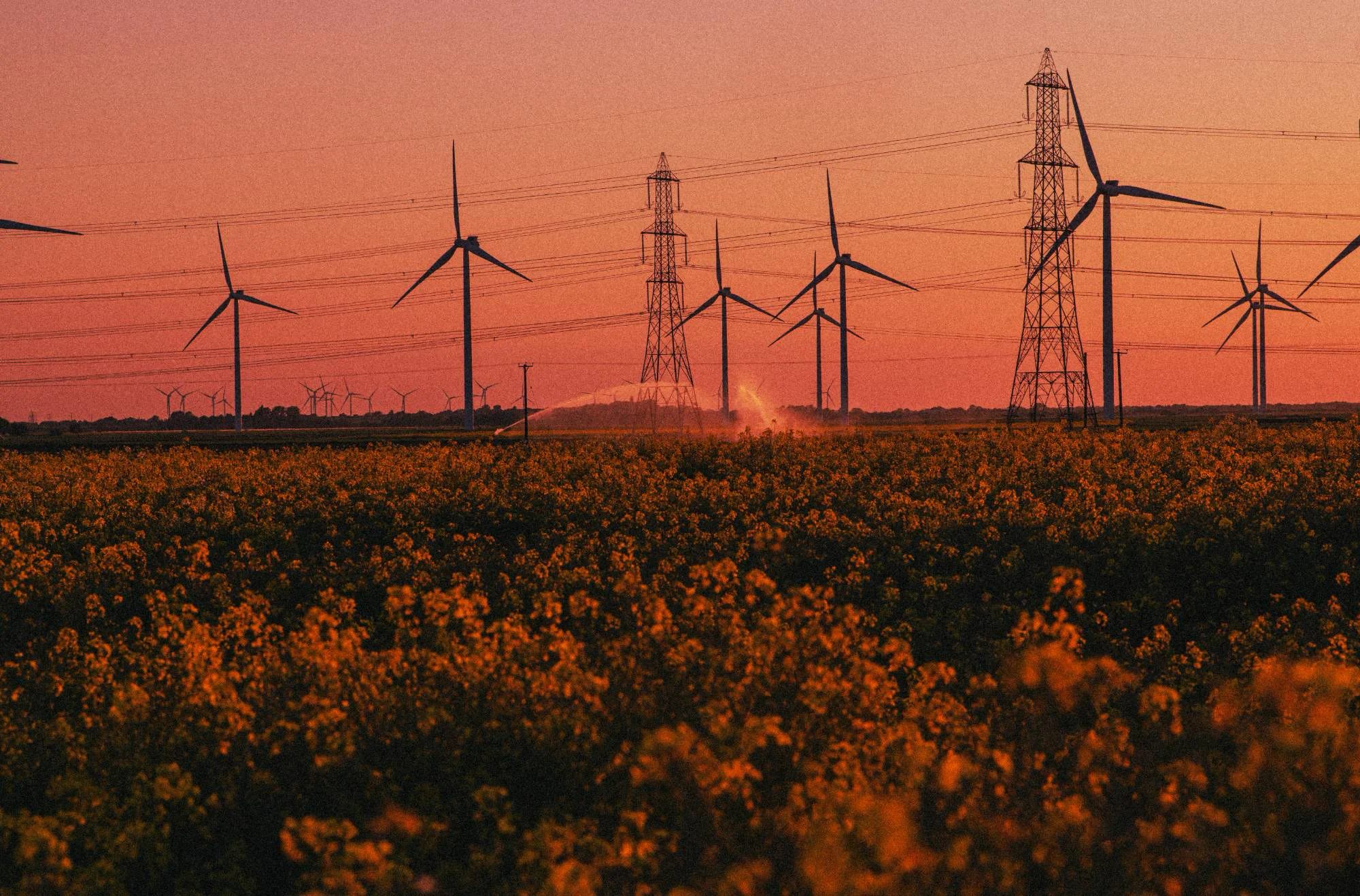
Stand in the same spot with a wide lens and you get a field, a fence and a lot of sky, with the turbines tiny in the distance. At 85mm they fill the frame, and the field becomes a band of colour underneath them.
A wide lens fits everything in. An 85mm makes you choose what matters.
The sun gets bigger
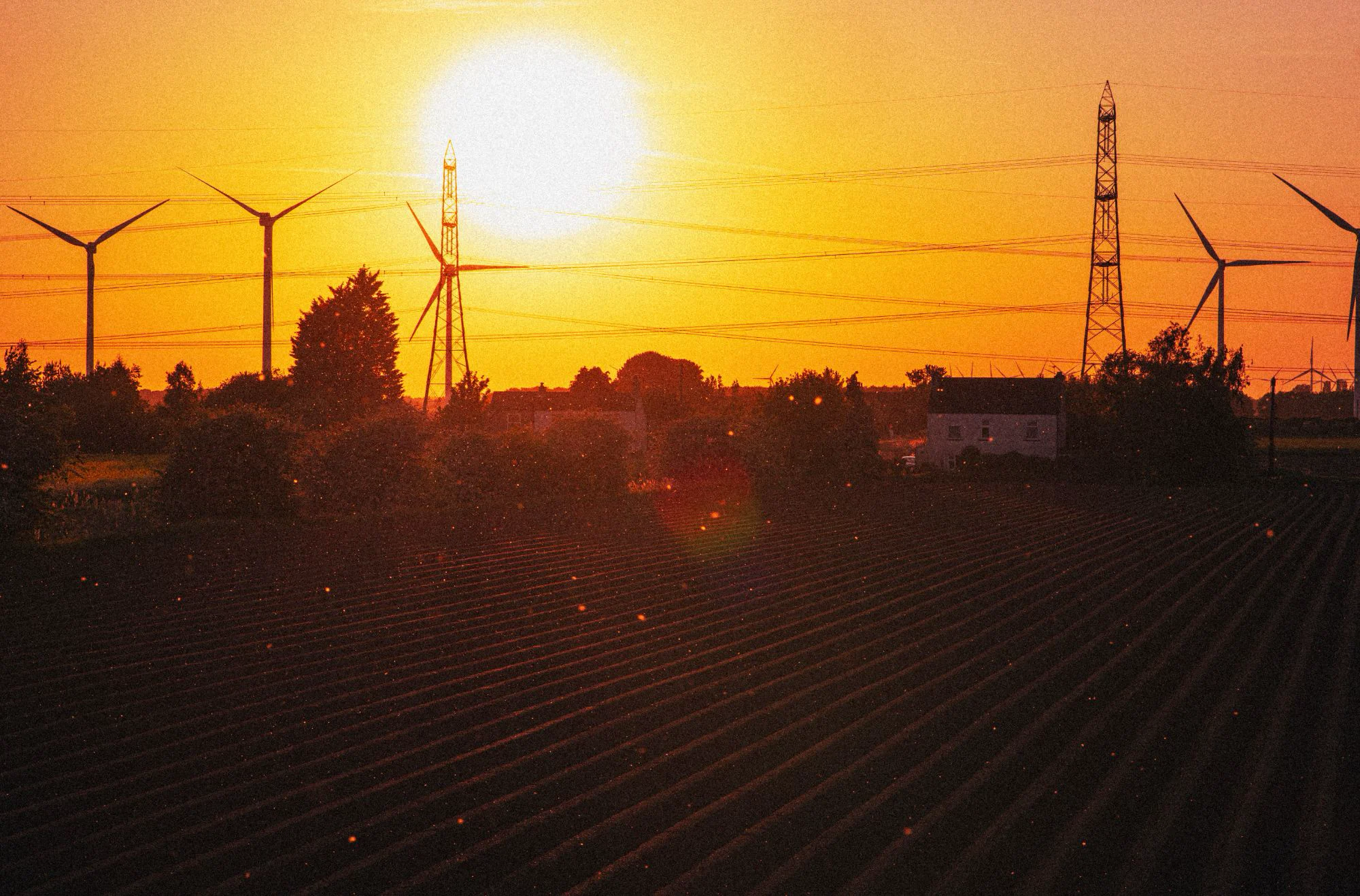
The size of the sun in your frame depends on focal length, not on how big the sky looks to your eye. At 85mm it is no longer a pinprick. Put a turbine in front of it and you have a picture; put it behind the pylons and the lines frame it for you.
Foreground blur that a kit lens can't do
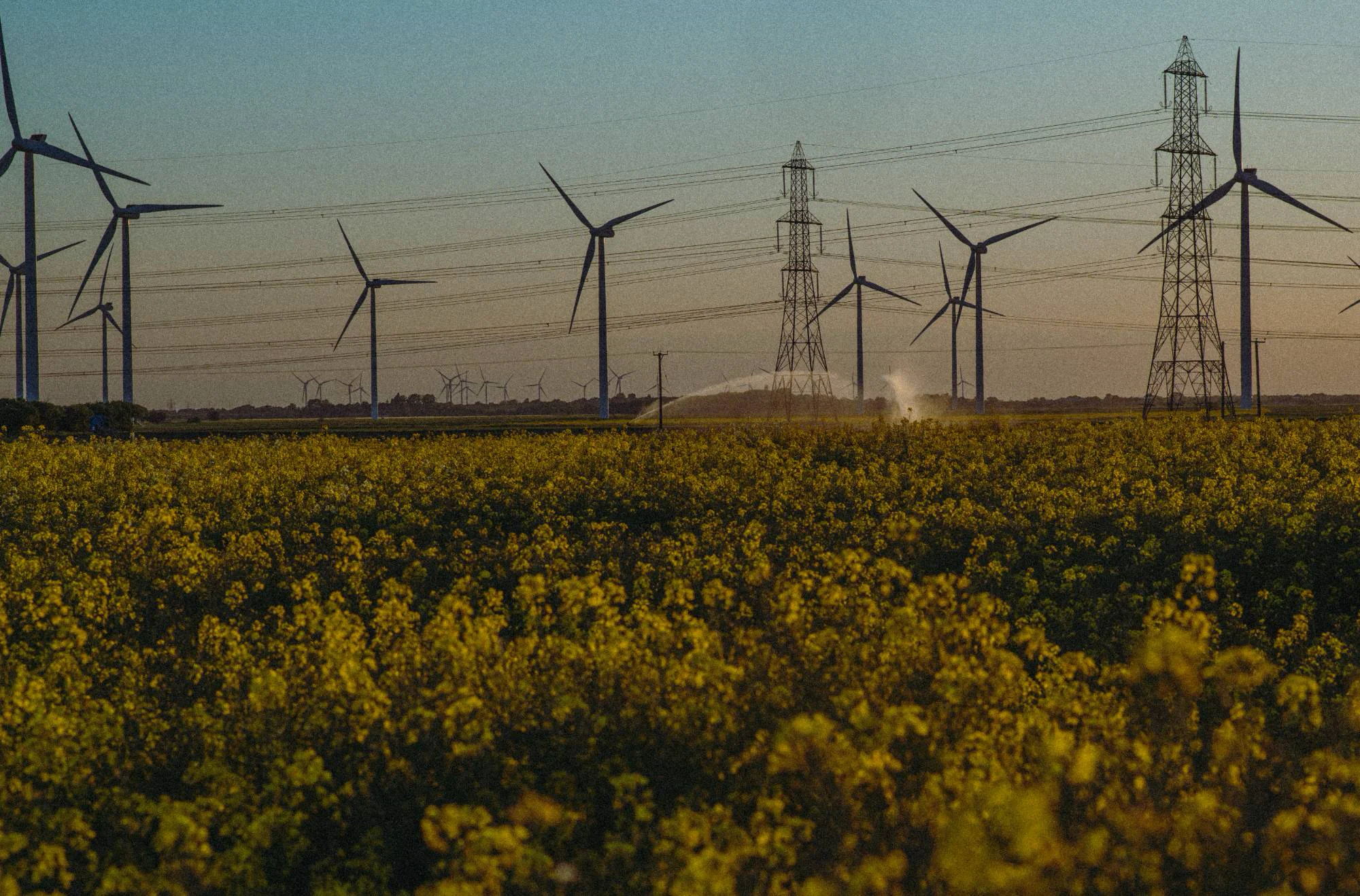
f/1.8 is not just for blurry portrait backgrounds. Get low in a rapeseed field, focus on the distance and the flowers closest to you dissolve into soft yellow and orange. It adds depth and a sense of standing in the scene, and it is something a slow kit lens simply cannot give you.
The lens itself
The sharpness is what sold me. Even with the aperture wide open, fine detail like power lines, turbine blades and individual flower heads comes out crisp, and stopped down it is properly sharp from edge to edge. For a lens at this price, it is spectacular.
It is not perfect. It is quite heavy, and you feel it after a long evening walking field edges with it hanging off your shoulder. It is a prime, so there is no zooming. If the frame is wrong, you walk. Sometimes a long way. But I have come to see that as part of the appeal: walking to find the frame makes you look harder at the scene.
On my Sony, which has an APS-C sensor, the 85mm frames roughly like a 127mm lens would on full frame. That extra reach is part of why it works so well for turbines, sunsets and cars at a distance.

Frame it like a film
The tighter field of view lets you compose deliberately, like stills from a film. I often crop these even further into a wide panoramic letterbox. When there is nothing in the frame that does not need to be there, the picture gets stronger.

It's a car lens too
I use the same lens for automotive work. Compression does for roads what it does for turbines. It pulls the background up behind the car, so a stretch of country road, a rapeseed field and a line of trees all sit tight around the subject. I have also used it to flatten a winding lane against an industrial skyline, where the weight of the background makes the empty road feel even lonelier.

Watch it set
Here is the same view of turbines and pylons as a timelapse, shot at 85mm on the evening of 10 May 2025. The sun drops through the pylon lines and slides behind the turbines in a few seconds of screen time.
Notes from the field
A few of these frames went out with captions when I first shared them. They sum up how this lens makes me think about a scene.

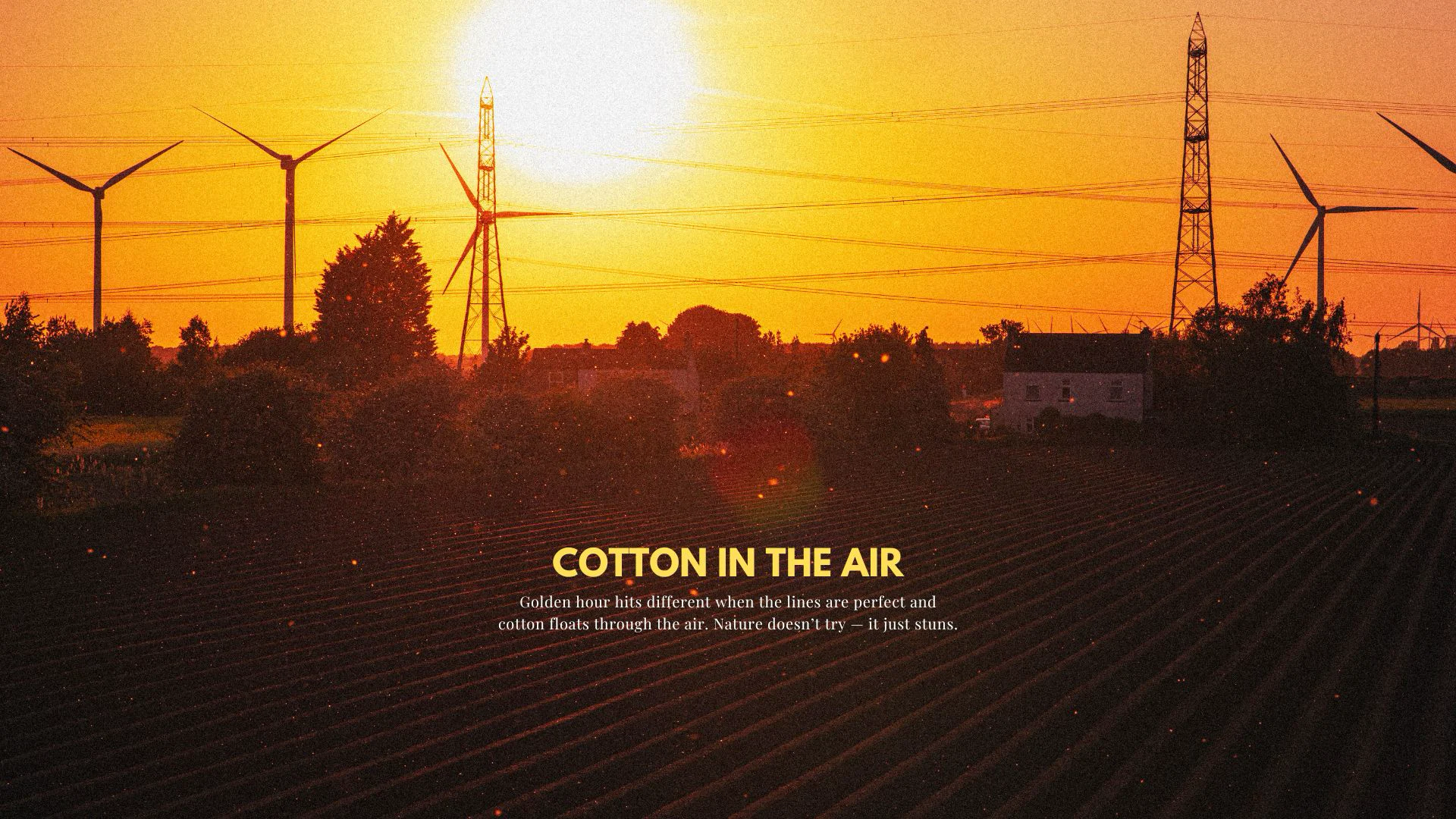


No rules. Just try it.
There are no creative rules about what you can and cannot use. Somebody decided the 85mm was a portrait lens, and most people never question it. The best thing I have done for my landscape work is ignore that.
If you have been shooting with nothing but a 50mm f/1.8 or the kit lens that came with your camera, it is time to extend your kit. Not because the gear makes the photographer, but because a new focal length makes you see differently. It forces new compositions and breaks the habits you did not know you had.
Do not be scared to try new things. In life, sometimes you have to take the risk. And this one? It isn't so scary.
If you're thinking about one
- Expect the weight. Use a decent strap, and plan to carry it for a whole evening.
- Stop down for depth. Use f/1.8 when you want soft foreground flowers; stop down when you need everything sharp front to back.
- Use your feet. Walk back, walk left, crouch. The frame is out there; you just have to find where it lines up.
- Shoot the sun safely. Compose on the screen or the electronic viewfinder, never through an optical one. There's more on that in Chasing the last light.

Comments
No comments yet. Be the first.